

Key Takeaways
- Myopia happens when the eye grows too long, blurring distant objects
- Multifocal contact lenses use a bullseye design to redirect light and slow eye growth
- High-add multifocal lenses have been shown to slow myopia progression by roughly 43% over three years
- Other options like Ortho-K and low-dose atropine drops can also help
- An eye exam is the first step to finding the right fit for your child
What Your Child’s Eyes Are Going Through
If your child keeps squinting at the board at school or moving closer to the TV, myopia could be part of the picture. Myopia, or nearsightedness, means their eye has grown a little too long from front to back. That extra length blurs distant objects, making everyday things like sports, movies, and classroom lessons harder to enjoy.
Multifocal contact lenses can help slow the progression of myopia in children by redirecting light in a way that signals the eye to stop growing so fast. This is a big deal, because catching it early and acting on it can make a real difference for your child’s long-term eye health. Myopia control treatments are available for children at different stages, and the sooner you explore your options, the better.
What Myopia Actually Does to Your Child’s Eyes
A myopic eye isn’t shaped the way it should be. It grows slightly too long, which pushes the focus point in front of the retina instead of right on it. That’s why faraway things look blurry. Regular glasses or contact lenses fix the blur, but they don’t do anything to slow the eye from growing longer.
That’s where myopia control comes in. The goal isn’t just clearer vision today. It’s about reducing how much the eye grows over time, so your child has healthier eyes as they get older. Starting treatment sooner rather than later gives the best chance at keeping progression in check. Research even projects that myopia prevalence could affect over half the global population by 2050, which makes early action all the more worthwhile.
How Multifocal Lenses Work Differently
The Bullseye Design Explained Simply
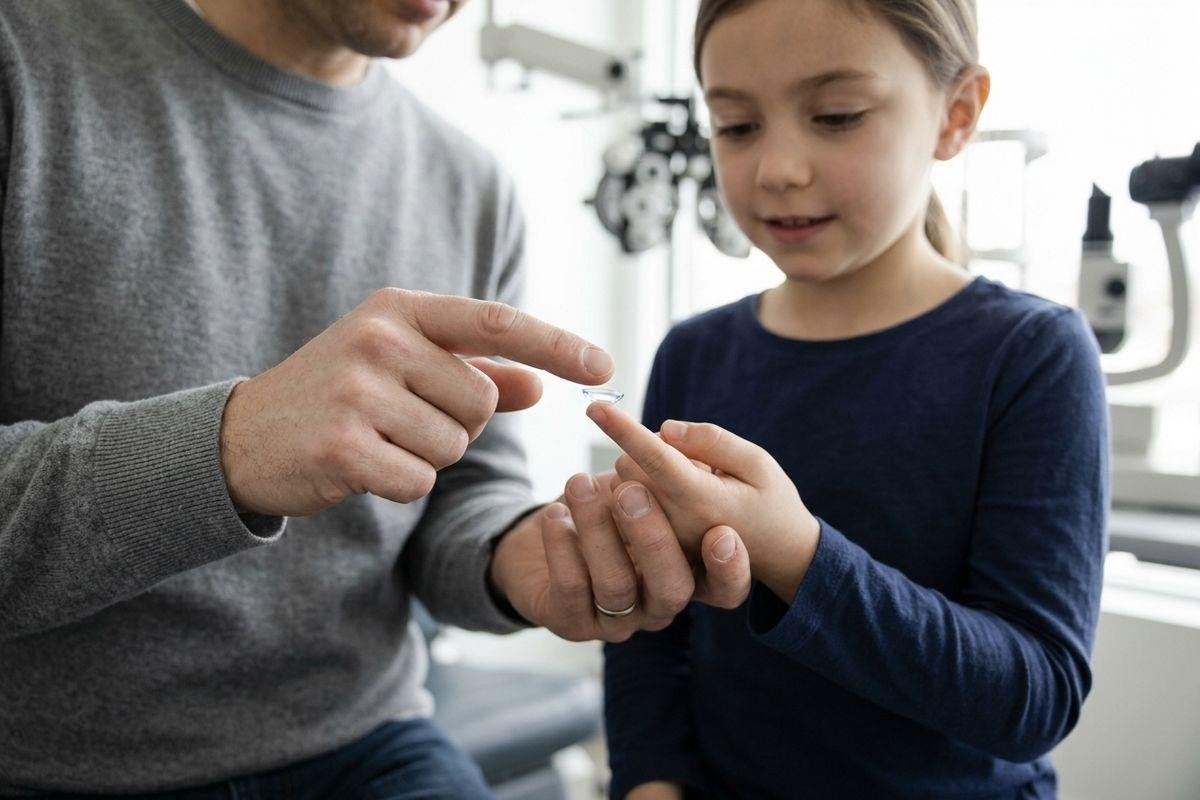
Multifocal contact lenses look a lot like regular contacts, but they have a clever two-zone design. The centre zone clears up your child’s distance vision, just like a standard lens would. The outer ring around it does something different altogether.
That outer zone bends light so it focuses slightly in front of the retina, rather than behind it. Think of it like a bullseye on a target. Each zone has a specific job, and together they cover both clear vision and growth control at the same time. You can learn more about how multifocal contacts work for myopia control to get a deeper look at the mechanics behind this approach.
Why That Light Redirection Matters
When light lands in front of the retina, the eye reads that as a signal to slow down its growth. It’s a natural feedback loop that multifocal lenses tap into. Regular single-vision lenses actually do the opposite. They focus peripheral light behind the retina, which can send a signal that encourages the eye to keep growing longer.
So while your child sees clearly with both types of lenses, multifocal lenses are quietly working in the background to reduce that growth signal. It’s a small design difference with a meaningful impact over time. The American Optometric Association’s overview of myopia explains this feedback mechanism in more detail if you’d like to explore the science further.
What Results Families Are Actually Seeing
The research behind multifocal lenses for myopia control is encouraging. High-add multifocal lenses have been shown to slow myopia progression by roughly 43% over three years compared to single-vision lenses. That kind of reduction adds up significantly as your child moves through their school years.
Children as young as seven have adapted well to wearing multifocal contacts. Eye growth, measured directly, has been noticeably reduced compared to kids wearing standard lenses. For many families, that peace of mind alone makes the switch worth exploring. If you’re curious about what to expect at the appointment, children’s eye exams are designed to be comfortable and thorough from start to finish.
Other Myopia Control Options Worth Knowing
Orthokeratology (Ortho-K)
Ortho-K lenses are worn overnight while your child sleeps. They gently reshape the front surface of the eye so that by morning, your child can see clearly without any glasses or contacts during the day. It’s a popular choice for active kids who play sports or don’t love the idea of wearing lenses during the day.
The reshaping effect is temporary and reversible, so the lenses need to be worn regularly to maintain clear daytime vision. A doctor can help you figure out if Ortho-K is a good fit based on your child’s age and prescription. The different types of contact lenses available can also give you a helpful comparison if you’re weighing your options.
Low-Dose Atropine Eye Drops
Low-dose atropine drops are a small daily drop used to help slow myopia progression. They’re often used alongside other treatments like multifocal lenses or Ortho-K for added effect. These drops are available for children as young as five.
The dose used for myopia control is much lower than what you’d see in a clinical setting, which helps reduce side effects. The doctor can walk you through how they work and whether combining treatments makes sense for your child’s specific situation. Low-dose atropine research shows that concentrations as low as 0.05% can reduce progression by about half, making it a meaningful addition to a broader myopia control plan.
How to Get Your Child Started on Myopia Control
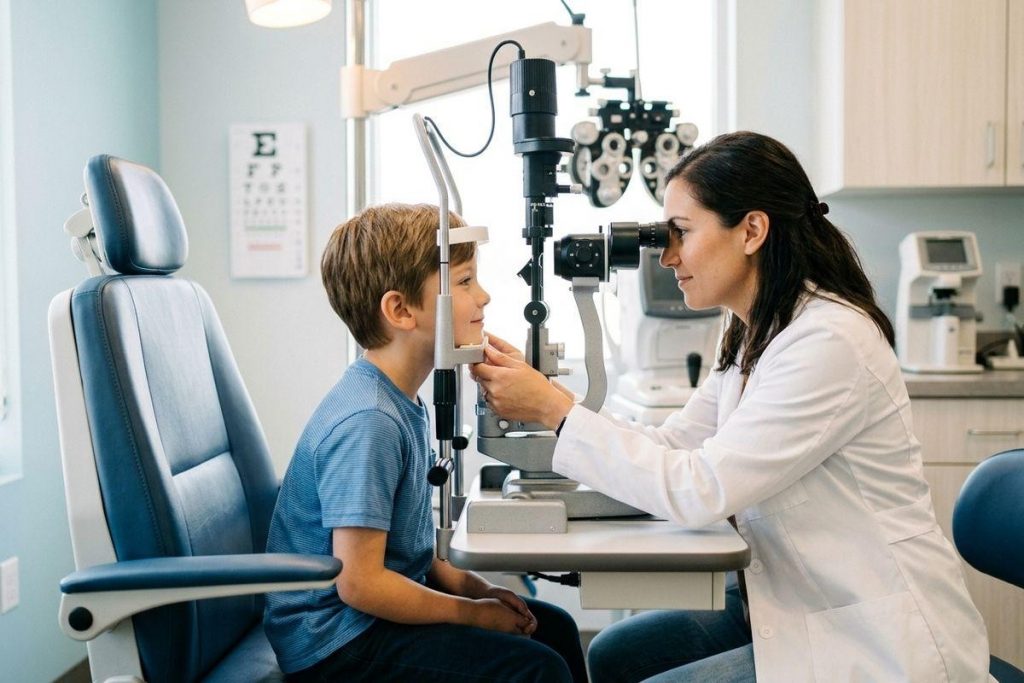
The first step is a thorough eye exam. The doctor will check your child’s current prescription, measure how their eyes are shaped, and look at any signs of progression. From there, treatment options are matched to your child’s age, lifestyle, and what they’d be comfortable wearing day to day.
No two kids are exactly the same, so the approach is always tailored. Some children do great with multifocal contacts right away. Others may start with drops or Ortho-K. The goal is finding what fits your child’s life without making eye health feel like a chore. If you’re wondering how often your child should come in, how often your child needs an eye exam is a great place to start.
Calgary Optometry Centre is here to help your family take that first step. Book an eye exam today to explore the right myopia control option for your child.